

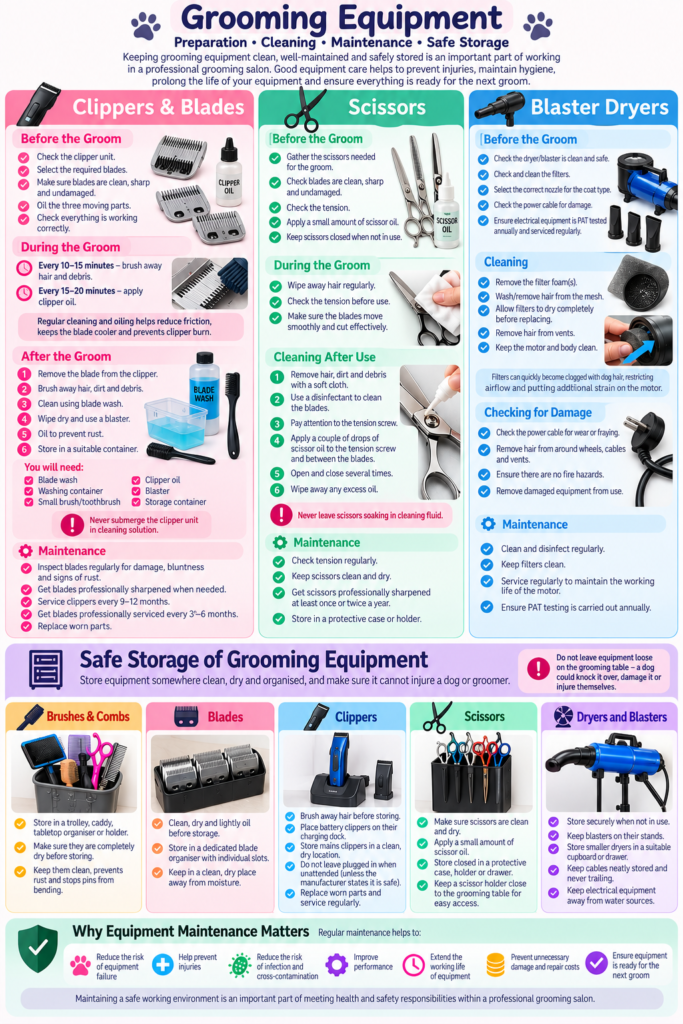
Keeping grooming equipment clean, well-maintained and safely stored is an important part of working in a professional grooming salon. Good equipment care helps to prevent injuries, maintain hygiene, prolong the life of equipment and ensure everything is ready for the next groom.
Clippers & Blades
Preparing Clippers and Blades
Before the groom begins, the clipper unit is checked and prepared. Gather all the blades required for the groom and make sure they are clean, sharp and in good working condition.
Each blade is lubricated with clipper blade oil before use. Oil is applied to the three moving parts of the blade. This helps reduce friction and heat, allowing the blade to move smoothly. It also reduces the workload on the clipper motor and can help prolong the life of both the blades and the clipper unit.
Caring for Clippers and Blades During the Groom
During grooming, hair and debris is brushed away from the blade teeth regularly, approximately every 10–15 minutes. Clipper blade oil is then applied approximately every 15–20 minutes, depending on the manufacturer’s instructions and how the blade is being used.
Regular brushing and oiling helps reduce friction and keeps the blade cooler. This is particularly important because an overheated blade can cause discomfort or clipper burn to the dog.
Cleaning Clippers and Blades After Use
After each use, the blade is removed from the clipper housing and any hair, dirt and debris is brushed away. Particular attention is given to the drive area, as hair and debris can build up and affect the performance of the clipper.
The clipper housing is also brushed and cleaned if any hair or debris has collected inside it.
For a more thorough clean, we will need:
- Blade wash
- A suitable blade-washing container
- A small brush or toothbrush
- Clipper blade oil
- A blaster
- A suitable storage container
The blade can be cleaned using an appropriate blade-washing solution, following the manufacturer’s instructions. The clipper unit itself must never be submerged in cleaning solution.
Once cleaned, the blade should be wiped dry and any remaining moisture can be removed using a blaster. The blade should then be lubricated with clipper oil to help prevent rust and maintain smooth movement.
If a full clean cannot be carried out between grooms, an appropriate disinfectant and clipper spray can be used according to the manufacturer’s instructions. A thorough clean should still be carried out at the end of the working day.
Maintaining Clippers and Blades
Blades are regularly inspected for damage, bluntness and signs of rust. A blade that is no longer cutting effectively is professionally sharpened.
How often blades need sharpening will depend on factors such as:
- How frequently they are used
- How well they are cleaned and maintained
- The condition of the dog’s coat
- The amount of dirt and debris they are exposed to
Blade sharpening is carried out by a trained professional using the correct equipment.
Clippers are professionally serviced regularly. As a general guide, clippers may require servicing around every 9–12 months, while blades may require professional attention around every 3–6 months, depending on usage.
Scissors
Preparing Scissors
Before starting a groom, we gather all of the scissors required for that particular dog. Check each pair carefully to make sure the blades are clean, sharp and free from damage.
The tension are also checked. Scissors that are too tight or too loose may not cut correctly and could potentially cause injury.
A small amount of scissor oil is applied where appropriate to help keep the moving parts working smoothly.
Scissors are kept in a closed position when not being used. This helps reduce the risk of injury to both the groomer and the dog.
Caring for Scissors During the Groom
Hair is wiped away from the scissors regularly throughout the groom.
Before using a pair of scissors, we check the tension to make sure they are neither too tight nor too loose. Correct tension allows the blades to move smoothly and cut effectively.
Cleaning and Maintaining Scissors
After each use, we remove any hair, dirt and debris using a soft cloth. A suitable disinfectant can then be used to clean the blades and help reduce the spread of bacteria.
Particular attention is paid to the tension screw, as hair and debris can collect around this area and affect the scissors’ performance.
Scissors should never be left soaking in cleaning fluid, as this can damage the metal and moving components.
After cleaning, a couple of small drops of scissor oil is applied to the tension screw and between the blades where they cross. Open and close the scissors several times to distribute the oil before wiping away any excess.
Scissors are professionally sharpened at least once or twice a year, depending on how frequently they are used.
Blaster Dryers
Preparing Dryers and Blasters
Before beginning a groom, the dryer or blaster is checked to make sure it is clean and safe to use.
The filters are checked and cleaned if necessary. The correct nozzle are also selected according to the dog’s coat type and the drying process required.
Because dryers and blasters are electrical equipment, they should be regularly inspected and maintained. Electrical equipment are also tested in accordance with current workplace safety requirements and the manufacturer’s recommendations.
Regular servicing can help identify worn components and maintain the working life of the motor.
Cleaning Dryers and Blasters
During and after the groom, hair is removed from the vents and other areas where it may accumulate.
The filter foam is removed according to the manufacturer’s instructions and cleaned to remove trapped hair and debris. If the filter is washable, it is washed appropriately and allowed to fully dry before being replaced.
The air filters are particularly important because they can become clogged quickly with dog hair. A blocked filter can restrict airflow and place additional strain on the dryer.
Checking for Damage
The power cable are checked regularly for signs of wear, damage or fraying. Any damaged electrical equipment are removed from use until it has been inspected or repaired appropriately.
Hair is also removed from around wheels, cables, vents and other areas where it could accumulate and potentially create a fire or trip hazard.
Safe Storage of Grooming Equipment
Correct storage is just as important as cleaning and maintenance. Equipment are stored somewhere clean, dry and organised, while also being positioned so that it cannot injure a dog or groomer.
As a general safety rule, equipment is not left loose on the grooming table. A dog could knock equipment onto the floor, damage it or injure themselves on sharp equipment such as scissors.
Brushes & Combs
Brushes and combs are stored in a grooming trolley, caddy, tabletop organiser or suitable storage holder.
They are always completely dry before being put away. This helps prevent rust, corrosion and bacterial growth.
Keeping brushes and combs organised also helps prevent pins from becoming bent or damaged and makes it easier to find the correct tool during a groom.
Blades
Blades should be cleaned, dried and lightly oiled before storage to help protect them against rust.
They are stored in a dedicated blade organiser with individual slots or another suitable protective storage system. The storage area is clean, dry and away from excessive moisture.
Clippers
Before storing clippers, we brush away any loose dog hair and debris from the unit.
Battery-operated clippers are placed on their charging dock according to the manufacturer’s instructions, while mains-powered clippers are stored in a clean, dry location.
Clippers are not left plugged in when the salon is unattended unless the manufacturer specifically states that this is safe and appropriate.
Any worn or damaged parts are replaced, and the clippers are serviced regularly to ensure they remain safe and effective.
Scissors
Before storing scissors, we make sure they are completely clean and dry. Moisture can contribute to rust and may affect the sharpness and tension of the blades.
A small amount of scissor oil is applied to the tension screw and between the blades where they cross. Any excess oil is wiped away.
Scissors are stored closed in a protective case, holder or drawer in a dry location. A scissor holder with individual slots is kept close to the grooming table for easy access.
Dryers and Blasters
Dryers and blasters are stored securely when not in use. Blasters are kept on their stands, while smaller dryers are stored in a suitable cupboard or drawer where appropriate.
Power cables are neatly stored and are never left trailing across the salon floor, where they could create a trip hazard.
Electrical equipment are also kept as far away from water sources, such as the bath, as reasonably practicable.
Why Equipment Maintenance Matters
Grooming equipment needs to be properly prepared, cleaned, maintained and stored to help keep both the groomer and the dogs in the salon safe.
Regular maintenance can also:
- Reduce the risk of equipment failure
- Help prevent injuries
- Reduce the risk of infection and cross-contamination
- Improve the performance of grooming equipment
- Extend the working life of equipment
- Prevent unnecessary damage and repair costs
- Ensure equipment is ready for the next groom
Maintaining a safe working environment is an important part of meeting health and safety responsibilities within a professional grooming salon.
