

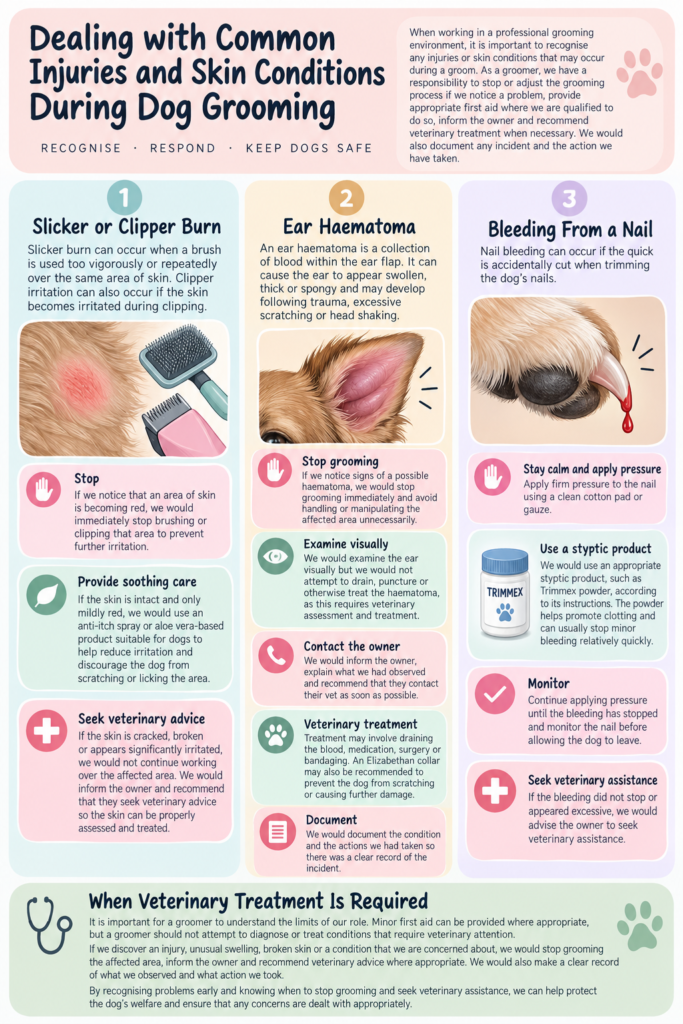
When working in a professional grooming environment, it is important to recognise any injuries or skin conditions that may occur during a groom. As a groomer, we have a responsibility to stop or adjust the grooming process if we notice a problem, provide appropriate first aid where we are qualified to do so, inform the owner and recommend veterinary treatment when necessary. We would also document any incident and the action we have taken.
Slicker or Clipper Burn
Slicker burn can occur when a brush is used too vigorously or repeatedly over the same area of skin. Clipper irritation can also occur if the skin becomes irritated during clipping.
If we notice that an area of skin is becoming red, we would immediately stop brushing or clipping that area to prevent further irritation. If the skin is intact and only mildly red, we would provide appropriate soothing care, such as an anti-itch spray or aloe vera-based product suitable for dogs, to help reduce irritation and discourage the dog from scratching or licking the area.
If the skin is cracked, broken or appears significantly irritated, we would not continue working over the affected area. We would inform the owner of what we have found and recommend that they seek veterinary advice so that the skin can be properly assessed and treated.
Ear Haematoma
An ear haematoma is a collection of blood within the ear flap. It can cause the ear to appear swollen, thick or spongy and may develop following trauma, excessive scratching or head shaking.
If we noticed signs of a possible haematoma during a groom, we would stop grooming immediately and avoid handling or manipulating the affected area unnecessarily. We would examine the ear visually but would not attempt to drain, puncture or otherwise treat the haematoma, as this requires veterinary assessment and treatment.
We would contact the owner, explain what we had observed and recommend that they contact their vet as soon as possible. Depending on the individual case, veterinary treatment may involve draining the blood, medication, surgery or bandaging to help prevent the haematoma from returning. An Elizabethan collar may also be recommended by the vet to prevent the dog from scratching or damaging the ear further.
We would document the condition and the actions we had taken so there was a clear record of the incident.
Bleeding From a Nail
Nail bleeding can occur if the quick is accidentally cut when trimming the dog’s nails. The first step is to remain calm and apply firm pressure to the nail using a clean cotton pad or gauze.
We would use an appropriate styptic product, such as Trimmex powder, according to its instructions. The powder helps promote clotting and can usually stop minor bleeding relatively quickly. We would continue applying pressure until the bleeding has stopped and monitor the nail before allowing the dog to leave.
If the bleeding did not stop or appeared excessive, we would advise the owner to seek veterinary assistance.
When Veterinary Treatment Is Required
It is important for a groomer to understand the limits of their role. Minor first aid can be provided where appropriate, but a groomer should not attempt to diagnose or treat conditions that require veterinary attention.
If we discover an injury, unusual swelling, broken skin or a condition that we are concerned about, we would stop grooming the affected area, inform the owner and recommend veterinary advice where appropriate. We would also make a clear record of what we observed and what action we took.
By recognising problems early and knowing when to stop grooming and seek veterinary assistance, we can help protect the dog’s welfare and ensure that any concerns are dealt with appropriately.
