

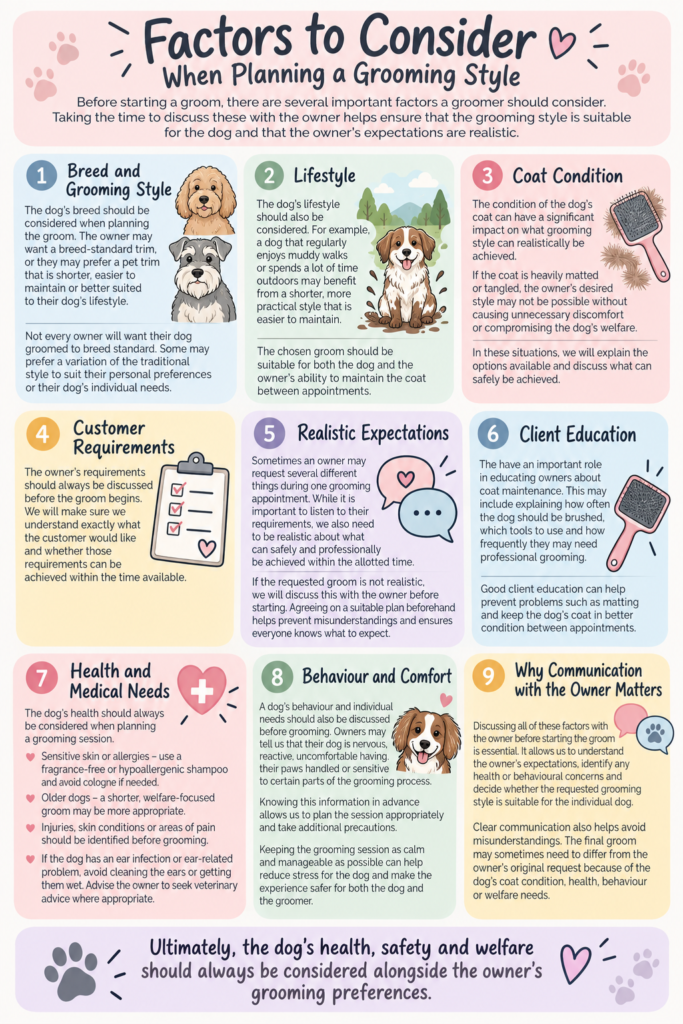
Before starting a groom, there are several important factors a groomer should consider. Taking the time to discuss these with the owner helps ensure that the grooming style is suitable for the dog and that the owner’s expectations are realistic.
Breed and Grooming Style
The dog’s breed should be considered when planning the groom. The owner may want a breed-standard trim, or they may prefer a pet trim that is shorter, easier to maintain or better suited to their dog’s lifestyle.
It is important to remember that not every owner will want their dog groomed to breed standard. Some may prefer a variation of the traditional style to suit their personal preferences or their dog’s individual needs.
Lifestyle
The dog’s lifestyle should also be considered. For example, a dog that regularly enjoys muddy walks or spends a lot of time outdoors may benefit from a shorter, more practical style that is easier to maintain.
The chosen groom should be suitable for both the dog and the owner’s ability to maintain the coat between appointments.
Coat Condition
The condition of the dog’s coat can have a significant impact on what grooming style can realistically be achieved.
If the coat is heavily matted or tangled, the owner’s desired style may not be possible without causing unnecessary discomfort or compromising the dog’s welfare. In these situations, the groomer should explain the options available and discuss what can safely be achieved.
Customer Requirements
The owner’s requirements should always be discussed before the groom begins. The groomer should make sure they understand exactly what the customer would like and whether those requirements can be achieved within the time available.
Realistic Expectations
Sometimes an owner may request several different things during one grooming appointment. While it is important to listen to their requirements, the groomer also needs to be realistic about what can safely and professionally be achieved within the allotted time.
If the requested groom is not realistic, we will discuss this with the owner before starting. Agreeing on a suitable plan beforehand helps prevent misunderstandings and ensures everyone knows what to expect.
Client Education
Groomers also have an important role in educating owners about coat maintenance. This may include explaining how often the dog should be brushed, which tools to use and how frequently the dog may need professional grooming.
Good client education can help prevent problems such as matting and keep the dog’s coat in better condition between appointments.
Health and Medical Needs
The dog’s health should always be considered when planning a grooming session.
If a dog has sensitive skin or allergies, a suitable fragrance-free or hypoallergenic shampoo may be more appropriate. The use of cologne may also need to be avoided if it could irritate the dog’s skin.
Older dogs may not be able to cope with a long grooming session. In these circumstances, a shorter welfare-focused groom may be more appropriate, with regular breaks and careful monitoring of the dog’s comfort.
Any injuries, skin conditions or areas of pain should also be identified before grooming. Ignoring these could cause further discomfort or potentially result in problems such as skin irritation or clipper/razor burn.
If a dog has an ear infection or another ear-related problem, the groomer should avoid unnecessarily handling or cleaning the ears and should take care not to get them wet. Where appropriate, the owner should be advised to seek veterinary advice.
Behaviour and Comfort
A dog’s behaviour and individual needs should also be discussed before grooming. Owners may tell the groomer that their dog is nervous, reactive, uncomfortable having their paws handled or sensitive to certain parts of the grooming process.
Knowing this information in advance allows the groomer to plan the session appropriately and take additional precautions.
Keeping the grooming session as calm and manageable as possible can help reduce stress for the dog and make the experience safer for both the dog and the groomer.
Why Communication with the Owner Matters
Discussing all of these factors with the owner before starting the groom is essential. It allows the groomer to understand the owner’s expectations, identify any health or behavioural concerns and decide whether the requested grooming style is suitable for the individual dog.
Clear communication also helps avoid misunderstandings. The final groom may sometimes need to differ from the owner’s original request because of the dog’s coat condition, health, behaviour or welfare needs.
Ultimately, the dog’s health, safety and welfare should always be considered alongside the owner’s grooming preferences.
